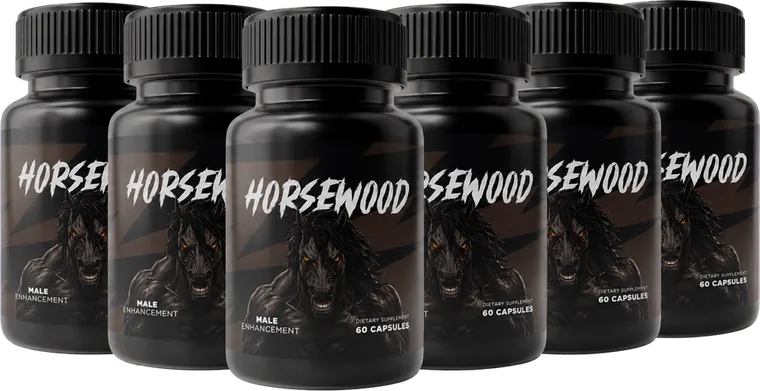
How to read the HorseWood label
Every HorseWood ingredient carries a printed number, so there is no guessing involved. Read the panel in three passes: the amount, the plant part, and the extract ratio. All three change what a number actually means, and two of them are where supplement labels usually get away with something.
| Entry as printed | Amount |
|---|---|
| Saw Palmetto (Serenoa repens) Berry Extract | 20 mg |
| Wild Yam (Dioscorea villosa) Root Extract | 20 mg |
| Sarsaparilla (Smilax ornata) Root Extract | 20 mg |
| Nettle (Urtica dioica) Leaf Extract | 20 mg |
| Boron Amino Acid Chelate | 20 mg |
| Tongkat Ali (Eurycoma Longifolia) 100:1 extract | 10 mg |
| Horny Goat Weed (Epimedium sagittatum) 10:1 extract | 8 mg |
| Total actives | 118 mg |
Serving size is 2 capsules, servings per container 30, total actives 118 mg, label revision REV 11/25.
The prostate pair: saw palmetto and nettle leaf
Saw palmetto berry extract at 20 mg is the most researched plant here, and the research was done at 320 mg a day. Twenty milligrams is a sixteenth of that. It is a nod in the direction of urinary comfort, not a treatment for an enlarged prostate.
Nettle at 20 mg is the entry most buyers misread. HorseWood prints nettle leaf. The prostate literature used nettle root, usually at 300 mg to 600 mg a day. Leaf and root are different chemistry from the same plant, and the leaf is the part associated with hay fever and joint complaints.
The hormone pair: boron and tongkat ali
Boron amino acid chelate at 20 mg is the mineral. Trials that moved free testosterone used roughly 6 mg to 10 mg a day of elemental boron. A chelate is elemental boron bonded to an amino acid carrier, and the carrier is most of the weight, so 20 mg of chelate is not 20 mg of boron. HorseWood does not print the elemental figure, which is the single most useful number missing from the panel.
Tongkat ali at 10 mg is a 100:1 extract, printed as equivalent to about 1000 mg of dry root powder. Concentration ratios describe raw material, not standardised active content, so the equivalence is the manufacturer's arithmetic rather than a measurement. Even taken at face value, it is the one HorseWood entry that lands anywhere near a studied intake.
Prices, boxes and the 60 day guarantee are set by the seller and shown on the official HorseWood order page.
Check the current HorseWood priceThe tradition trio: wild yam, sarsaparilla, horny goat weed
Wild yam root extract at 20 mg carries diosgenin. Diosgenin is what chemists used to manufacture steroid hormones in a laboratory. Human beings do not run that reaction internally. Any claim that the wild yam in HorseWood turns into testosterone or DHEA inside you is a lab process dressed up as biology.
Sarsaparilla root at 20 mg is a nineteenth century tonic with saponins, folk credibility and essentially no controlled human trials in men.
Horny goat weed at 8 mg is a 10:1 extract, about 80 mg of dry powder. Its marker compound icariin is studied in animals and cell work for nitric oxide signalling. Human evidence is thin at any dose. Men on nitrates or blood pressure medication should ask a doctor before taking it at all. The evidence for each of these is graded in the HorseWood evidence article.
What else is in the capsule, and what is missing
Other ingredients: Microcrystalline Cellulose, Gelatin, Magnesium Stearate. Microcrystalline cellulose is the filler, magnesium stearate keeps the powder flowing through the machine, and gelatin is the shell. Gelatin is normally bovine or porcine, so HorseWood is neither vegetarian nor vegan and is not suitable for anyone avoiding animal derived capsules on religious grounds.
The honest limits of this ingredient list: no HorseWood entry is dosed at the level used in the trials that made these plants famous except, arguably, tongkat ali. There is no third party assay published for the finished capsule. And a label, however transparent, tells you what went in, not what your body does with it. Who that arithmetic suits is covered in the HorseWood safety and suitability guide.
General information only, not medical advice. HorseWood is a dietary supplement and these statements have not been evaluated by the Food and Drug Administration. This product is not intended to diagnose, treat, cure or prevent any disease. Talk to your doctor before starting any supplement.
All 8 articles are listed on the HorseWood blog. For current pricing and the guarantee, see the official HorseWood order page.